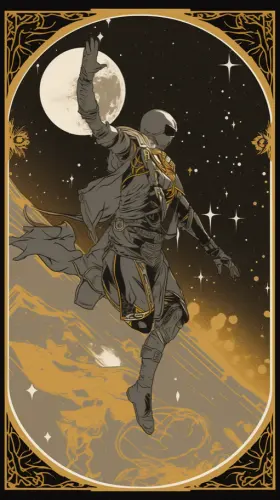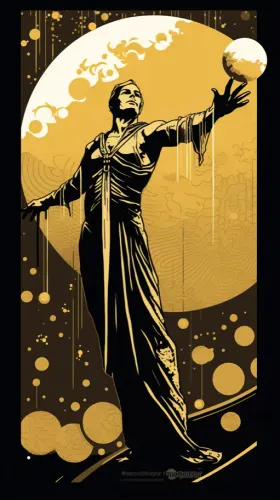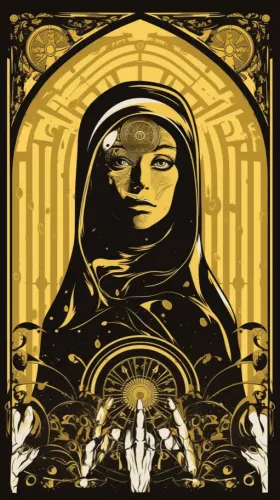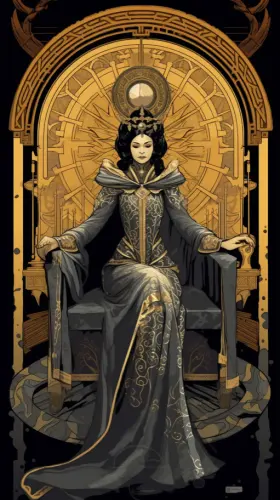
Major Arcanum XIII
Death
נ Hebrew letter Nun · ♏︎ Scorpio
The nameless arcanum clears the field so that something new can grow.
Arcanum XIII, Death, stands as the great threshold of the Major Arcana. In the Fool's journey from innocence to wholeness, it marks the necessary dissolution that precedes rebirth. Without this card, the path would stall in false permanence; with it, the seeker learns that every ending is a doorway. Its place is midway, after the Hanged Man's surrender and before Temperance's alchemy, where the old self is composted and the new self is not yet formed.
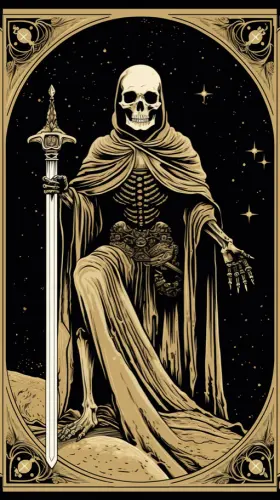
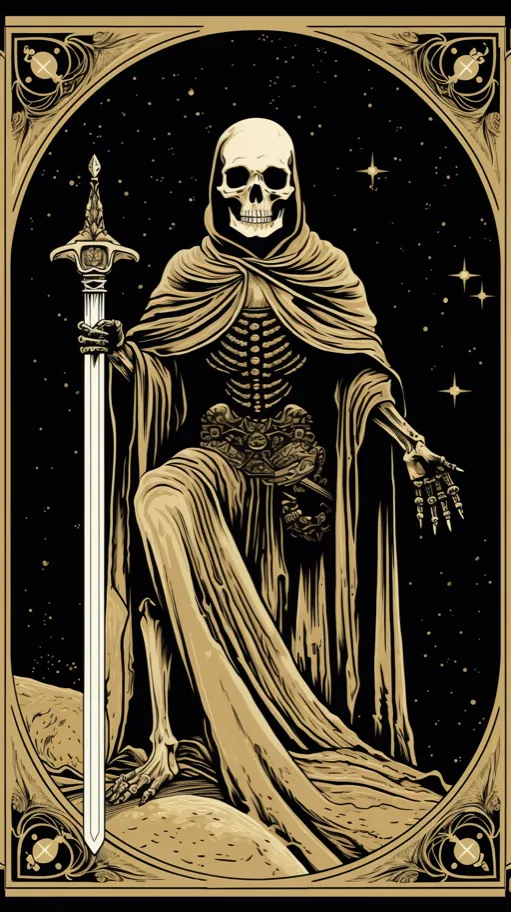
In the Marseille tradition, Death is not morbid but matter-of-fact: a skeleton with a scythe, cutting down all that has lived its time. The card teaches that transformation is impersonal and impartial. It asks us to release what we have outgrown, whether a role, a belief, or a chapter of life, so that renewal can take root. It is the quiet promise that nothing truly dies; it only changes form.
- Upright
- Transformation, ending, renewal
- Reversed
- Clinging to the past, fear of change
Upright
Upright, Death announces a profound transformation. Something is ending—not as punishment, but as a natural completion. You may feel the ground shift as an identity, relationship, or phase of life falls away. Resistance only prolongs the pain; acceptance opens the way to renewal. This card often appears when you have already sensed the ending but hesitated to name it. It asks you to let the scythe do its work, trusting that what emerges will be truer to who you are becoming. The void is not empty; it is fertile.
Reversed
Reversed, Death points to clinging. You may be holding onto a situation, a person, or an outdated self-image long after its season has passed. Fear of the unknown keeps you in a holding pattern, and the stagnation begins to feel heavier than the change you dread. This card asks you to examine what you are refusing to release. Often the fear is not of loss but of the unknown that follows. Gently, honestly, you are invited to loosen your grip and let life move again.
In love
In love, Death signals a turning point. A relationship may end, or it may transform into something entirely new. If you are single, an old pattern of attachment is dying so that a healthier connection can arise. Honesty about what is truly over is the kindest act. Clinging to a dead form only delays the love that wants to be born.
In work
At work, Death marks the end of a role, project, or professional identity. A job may conclude, a business may pivot, or a long-held ambition may lose its meaning. This is not failure but evolution. Clear away what no longer fits, and make space for work that aligns with who you are now. Endings here are strategic, not personal.
On the spiritual path
On the spiritual path, Death is the ego's dissolution. It asks you to die to the small self—its fears, its fixed identities—so that something greater can live through you. This is the mystic's dark night, the stripping away of consolation and certainty. Yet in that emptiness, the ground of being reveals itself. Each release is an initiation into a wider, more compassionate self.
Symbolism
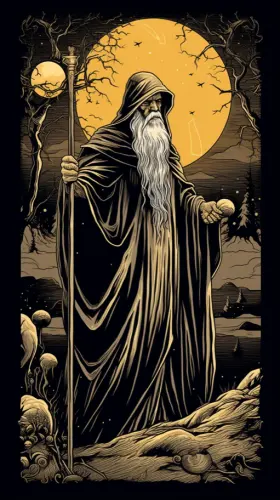
The number thirteen reduces to four (1+3), echoing the Emperor's structure but here as the breakdown of form. The Hebrew letter Nun means fish, signifying life teeming beneath the surface and the hidden growth that follows loss. Scorpio, its astrological sign, governs death, rebirth, and deep transformation. In the Marseille tradition, the skeleton with scythe and scattered crowns shows death's democracy: it spares no rank, cutting all that is ripe. The card is both warning and promise.
The arcanum’s advice
Let go of what is already ending, and trust that the clearing is making room for new life.
Yes or no?
In a yes/no reading, Death leans toward no—not as denial, but as a sign that the matter as framed is finished; a yes would require a completely new form.
Questions about this arcanum
Does the Death card mean someone will die?
No. In tarot, Death almost never predicts physical death. It symbolizes transformation, endings, and rebirth. It may refer to the end of a phase, a relationship, or a self-image. If you are grieving a real loss, the card can acknowledge that passage, but it points to renewal, not literal demise.
What should I do when Death appears in a reading?
Ask yourself what is already over in your life. The card invites you to cooperate with change rather than resist it. Identify what you are clinging to and consider how to release it with grace. Trust that the ending is necessary and that new growth will follow. Action often means letting go, not forcing a solution.
Is Death a negative card?
It is not negative or positive; it is transformative. Death clears away what no longer serves, making room for renewal. It can feel painful in the moment, but its long-term effect is liberation. Many readers welcome it as a sign of profound growth, honesty, and the courage to begin again.